Why Coat a Garage Floor?
Bare concrete soaks up oil, antifreeze, and road salt. It also sheds fine dust and stains easily. A garage floor coating seals the surface so spills wipe up, the floor is easier to sweep and wash, and the garage looks finished. In Biloxi, a sealed floor also helps keep humidity and salt from working into the slab.
Not every coating performs the same. The system, the preparation, and the condition of the slab all affect how well a floor holds up. This page explains the choices. For a wider overview, see the Biloxi epoxy flooring guide.
Epoxy vs. Polyaspartic for Garage Floors
| Epoxy | Polyaspartic | |
|---|---|---|
| Cure time | Slower; often a day or more before light use, with full cure taking longer | Fast; often ready for foot traffic within hours |
| Sun / UV | Can yellow or fade in strong sun | UV stable, holds clarity and color |
| Thickness | Builds thick, good at filling imperfections | Usually applied in thinner coats |
| Cost | Generally lower | Generally higher |
| Best use | Base coat or full system in enclosed garages | Topcoat, or full system for garages that see sun |
A common approach is an epoxy base coat with decorative flake and a clear polyaspartic topcoat. That combination aims to balance cost, thickness, and UV resistance. See the full polyaspartic vs epoxy comparison.
Decorative Flake Systems
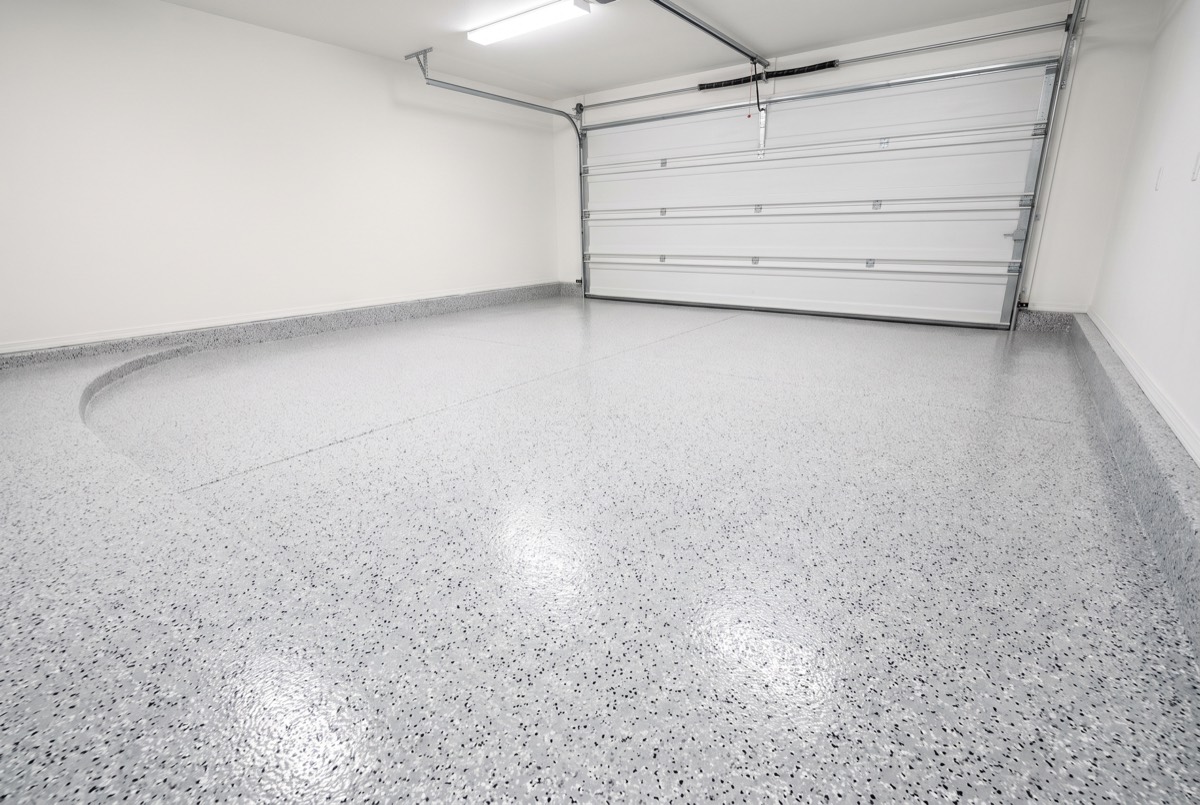
In a flake system, colored vinyl chips are scattered over the wet base coat and then sealed under a clear topcoat. The result hides minor surface flaws, adds texture for traction, and comes in many color blends. Full-broadcast flake covers the floor completely, while partial broadcast leaves more of the base color visible.
Preparing a Coastal Slab
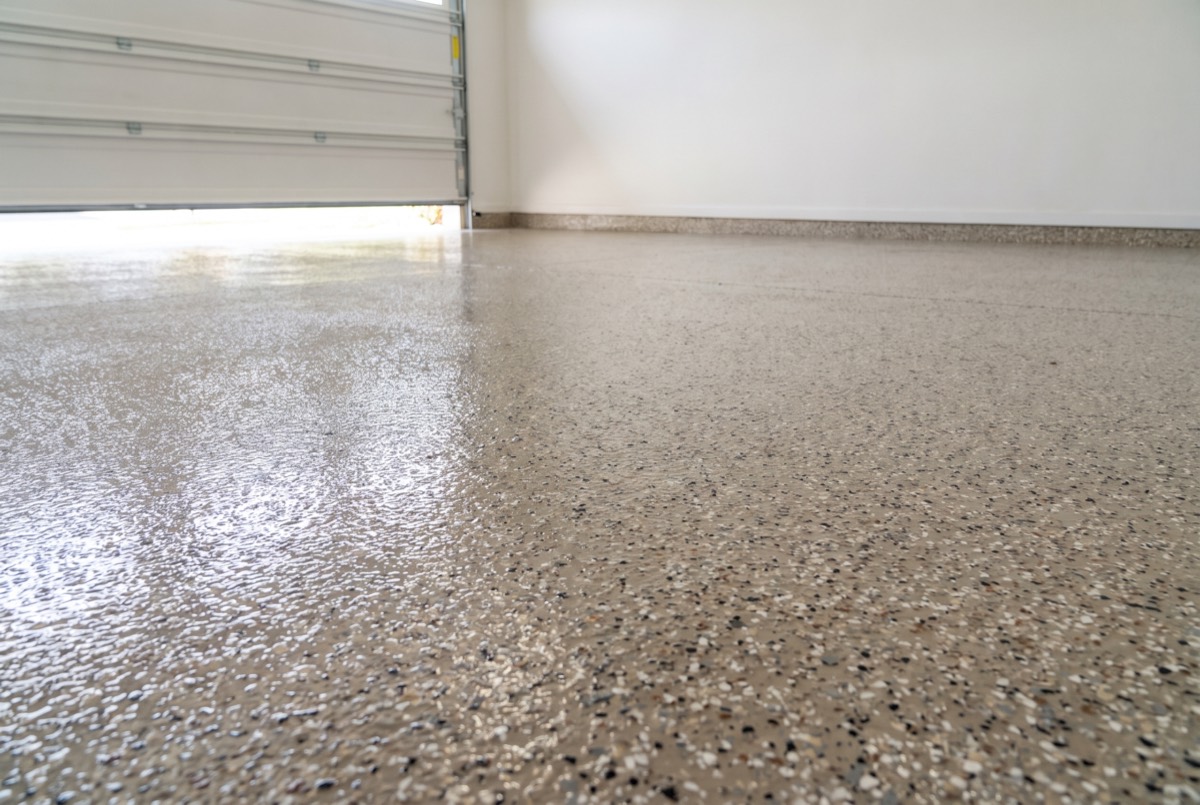
Preparation decides how well a coating bonds. A typical professional process looks like this:
- Inspect the slab. Look for cracks, spalling, old sealers, and oil contamination.
- Grind the surface. Diamond grinding removes weak surface material and opens the pores of the concrete so the coating can grip. Acid etching, an alternative, is generally less effective.
- Repair damage. Cracks and chipped joints are filled before coating.
- Test for moisture. Industry tests such as calcium chloride or in-slab relative humidity measure how much moisture the slab is releasing.
- Apply primer or moisture barrier if the slab needs it.
- Apply the base coat, flake, and topcoat.
Why moisture matters near the coast
The Mississippi Gulf Coast has a high water table and frequent humidity. A slab that moves water vapor upward can push a coating off the surface, which shows up as bubbles or peeling. Garages built on slabs without a vapor barrier are more likely to have this problem. Moisture testing before coating is a normal question to ask any installer. Read the full guide to concrete prep and moisture problems.
What Does a Garage Floor Coating Cost in Biloxi?
Residential garage coatings commonly run from roughly $3 to $12 per square foot. A typical two-car garage is around 400 to 600 square feet, so total project prices vary widely. The main factors:
- The coating system (basic epoxy, flake, polyaspartic, or metallic)
- Concrete condition and repairs needed
- Moisture barrier or special primers
- Removal of an old coating or sealer
- Garage size and access
These ranges are general guides, not quotes. Prices change, so request written estimates. See the full epoxy floor cost guide.
Questions to Ask Before Hiring
- How will the slab be prepared? Is it ground with a diamond grinder?
- Do you test for moisture? What happens if the test is high?
- Which products do you use, and what is the film thickness?
- What does the warranty cover, and what voids it?
- Are you licensed and insured in Mississippi?
- How long until I can walk on it and park on it?
Care and Maintenance
A coated floor needs little upkeep. Sweep or dust mop regularly, wash with a mild cleaner, and avoid harsh solvents. Wipe up spills when you can. Rubber mats under tires are not usually needed, but some owners use them to extend the surface life. Avoid dragging heavy metal objects across the floor.
Frequently Asked Questions
How much does a garage floor coating cost in Biloxi?
Residential garage coatings commonly range from roughly $3 to $12 per square foot depending on prep, system, and floor condition. Written quotes from several installers give the most accurate figure.
Is polyaspartic better than epoxy for a garage?
Polyaspartic cures faster and resists UV yellowing, but it costs more. Epoxy builds thickness at a lower price. Many garage floors use epoxy as a base with a polyaspartic topcoat.
Do coastal Mississippi slabs need moisture testing?
Moisture testing is recommended because slabs near the coast can transmit moisture, which can cause blistering or peeling of a coating.
Can a garage floor coating be applied over an old coating?
Sometimes, but the old coating usually has to be sound and well bonded, and it is typically ground down first. Peeling or failing coatings are removed.
How long does a garage floor coating last?
With proper preparation and a quality system, a coating can last many years. Hot tires, sun exposure, and poor moisture control shorten its life.
Does hot tire pickup damage coatings?
Hot tires can lift weak coatings that are poorly bonded. Systems that are properly cured and bonded to a ground surface resist it better.